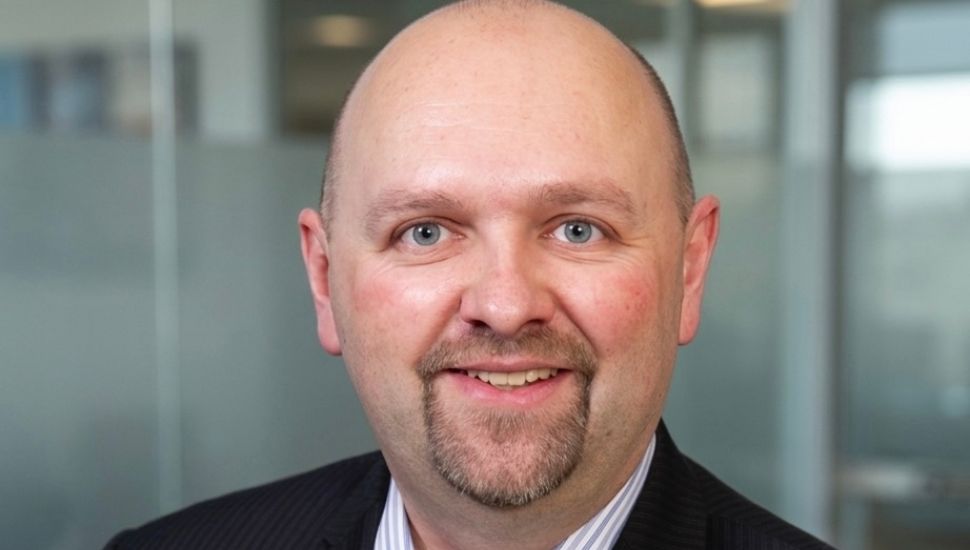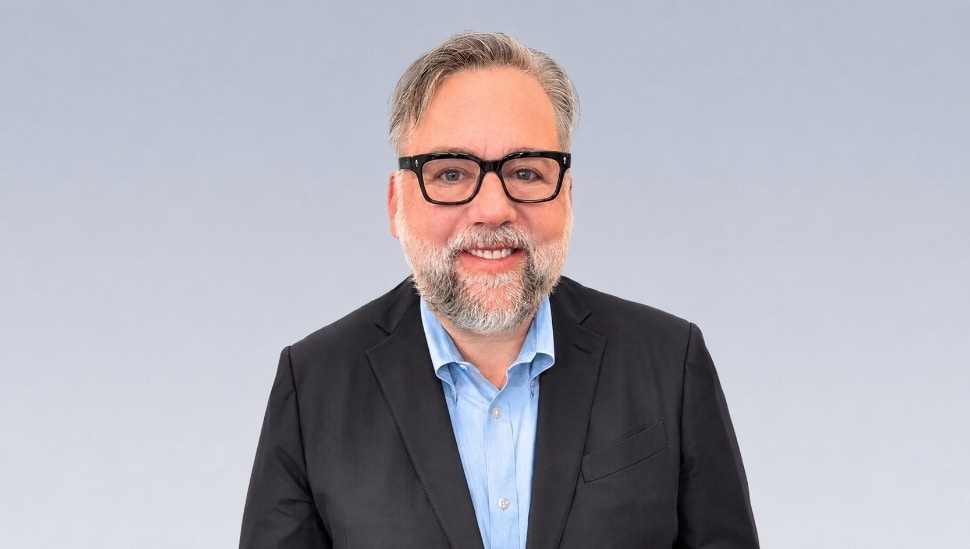

Dr. William Surkis, Chief Medical Officer of Penn Medicine Chester County Hospital, spoke with MONTCO Today about growing up in a small Manhattan apartment as the only child of a Holocaust survivor, working as tech support for his older neighbors, and volunteering in an ER at the peak of the AIDS epidemic.
Although Surkis’s interest in medicine dates back to childhood, he originally was an American Studies major at Bates College and doubled back shortly after graduation to pursue post-baccalaureate pre-med.
Throughout his medical career, he’s sought out a variety of experiences, both administrative and clinical, inpatient and outpatient, which now help him connect with his patients and support physicians he works with.
Where were you born, and where did you grow up?
I grew up as an only child in a two-bedroom, one-bathroom apartment in Washington Heights, in Manhattan. My parents lived there until the end of their lives.
What did your dad do? What did your mom do?
My dad was a Camera Repairman for Nikon, and my mother was an Audiologist.
What do you remember about growing up in Washington Heights?
I’m a Gen Xer with anxious parents, so I was an anxious child who became an anxious adult. But looking back, surprisingly, compared with today, I actually led a very free and relatively unworried childhood with lots of opportunities to explore New York City with my friends.
Growing up, if my parents needed eggs, they would hand me money, and I’d go to the bodega down the street or to Daitch-Shopwell, the supermarket on 187th Street. If you wanted pizza, you’d walk to Bill’s Pizza.
I took the subway to school. The 181st Street station is one of the deepest in New York City. There’s an escalator at one end, made famous by the musical In the Heights.
At the end of the station where my parents lived, you took an elevator all the way down and showed your student subway pass to the clerk, or sometimes to a police officer who would open the gate for you and let you into the subway.
How old were you the first time you rode the subway by yourself?
I was around age 12 when I started to ride the subway by myself.
Did you play any sports while you were growing up?
Only in gym class.
Everyone asks if I’m a Giants or Yankees fan, but my father was a Holocaust survivor who came to the United States in 1959, and he had zero interest in organized American sports. It would be Sunday night, and he would be very upset that 60 Minutes wasn’t on, and it was just football.
My mother would see football and say, “It’s so violent!” She’d see baseball and say, “It’s so boring!” God forbid there was NBA or hockey on.
What did you do to distinguish yourself in high school?
I was in the Model U.N., and I sang in the chorus and played guitar. I also volunteered at Lenox Hill Hospital on the Upper East Side from eighth grade through sophomore year.
What drew you to volunteering at a hospital at that age?
I knew I was drawn to that kind of work, and my mother encouraged me to volunteer. She believed it would be beneficial for college applications, and she had been a candy striper earlier in her life. Lenox Hill was an easy cross-town bus ride from school.
What about jobs? Did you work in high school, other than as a volunteer?
I started working as a Dishwasher at a summer camp in the eighth grade. I also babysat, and I had my own business, like Geek Squad, helping neighbors with their technology questions.
We lived in a building with many older residents who needed help with their computers or VCRs. I also worked as an errand boy for the Jewish Community Council of Washington Heights.
Where does your work ethic come from, Bill?
It is 100 percent from my parents. Working was a value instilled by both my parents. My mom worked hard all her life. She was a summer camp counselor, and that was her favorite thing in the universe.
My dad detested laziness and took pride in his work ethic his entire life. He never stopped fixing stuff around the house when he wasn’t at work and loved helping other people.
What kind of music floated your boat?
I played classical guitar and folk. I never played rock, which is one of those sad things in life. I still love ’80s and ’90s music.
I’m the most annoying person to listen to music with, because I’ll switch from some hip-hop song from the 90s or the early 2000s to Joni Mitchell or Chappell Roan, and then back to Pearl Jam.
Did you have a favorite artist in high school and college?
Billy Joel. I’ve been to four Billy Joel concerts.
Where did you end up going to college, and why there?
I went to Bates College in Maine.
I was drawn to northern New England. I had gone to summer camp in New Hampshire for most of my childhood, so the region felt familiar.
The size of the school was also appealing. I attended a private high school in Manhattan, with a graduating class of just 26 students, so going to a college with 1,200 people was an enormous increase.
In hindsight, was Bates a good choice for you?
It was a great choice. I was super happy there, and I still have a few close friends from college.
I was an American Studies major, not a Science major, and I think that gave me a more well-rounded education.
When did you determine that you wanted a career in medicine?
While volunteering at Lenox Hill, I started in the admissions office, but it didn’t feel clinical enough. When I turned 16 and was allowed, I began volunteering in the emergency department.
It was the peak of the AIDS epidemic in New York City, and we cared for a lot of men who were extremely ill. I still remember the fear people had of those patients and how terribly isolated they were made to feel.
In college, I was active in the Outing Club, and in the spring of my senior year, I took a three-day Wilderness First Responder course. It was a transformative experience that set me on a different path.
This was also the era when ER was on TV, and I think that show inspired many people of my generation to pursue careers in healthcare.
By the time I took the first responder course, I’d already accepted a teaching internship for the following year at the Putney School in Putney, Vt. But from the moment I arrived, I was thinking about what might come next. I began riding in an ambulance in Brattleboro, Vt.
Did you apply to medical school that year?
I hadn’t completed any of the prerequisites. So, I moved back in with my parents and, to my chagrin and theirs, spent two and a half years taking my pre-med classes.
This type of program is called post-baccalaureate pre-med, and it can be a challenging time in your life. The grades are so important. Today, some programs guarantee admission if you maintain a certain GPA, but NYU didn’t have that at that time, so there was a lot of uncertainty about where it would all lead.
My parents provided me with a place to live, but I worked as an Administrative Assistant at an investment bank to pay for school.
After completing my pre-med coursework, I moved back to Maine and worked for a year as the Education Director of the Mid Coast Maine chapter of the American Red Cross.
Where did you end up going to medical school?
That’s what ultimately brought me here.
I graduated from MCP-Hahnemann School of Medicine. I think there are only a few graduating classes that have that name on their diplomas, because MCP and Hahnemann were two longstanding medical schools in Philadelphia that later became Drexel University College of Medicine.
Looking back over your career, Bill, who were the people who saw promise in you?
I completed my residency in Internal Medicine at the Hospital of the University of Pennsylvania. When I finished in 2005, Lankenau offered me a job as a Hospitalist, but I wanted a role that combined both Inpatient and Outpatient Care, so I declined it.
I also interviewed at Cooper University Hospital in Camden, N.J. The Department Chair, Ed Viner, was interested in hiring me as a Primary Care Physician, but again, it felt like it was too narrowly focused for that stage in my career, so I turned it down.
A couple of months later, Eric Kupersmith, who led the hospital medicine group at Cooper, called me and said, “We keep talking about you as the one that got away. Would you be willing to have lunch with me?”
We met in Cooper Court, an old school hospital coffee shop. He asked me about my hopes and dreams, and he literally sketched out a schedule on a napkin and said, “Is this what you’re looking for?” I said yes to the job, right there.
What do you think he saw in you? Why were you the one who got away?
I demonstrated the value of hard work instilled in me by my parents throughout my residency. I was a leader in my class. And I think he saw my passion and excitement at the beginning of clinical practice.
Who else saw promise in you?
I spent three years at Cooper working with the residency program and medical students. During that time, I saw myself moving toward leading a residency program, but there weren’t any educational opportunities opening at Cooper in the near term.
So, I returned to Lankenau and interviewed with the same two leaders I had met with three years earlier — the Chairman, Jerry Santoro, and the Program Director, Daisy Smith.
Once again, the term “the one that got away” came up, and they asked me to come back to teach residents.
Daisy was a crucial early mentor. I learned alongside her from 2008 through 2011, when I ultimately took over the program.
I was also influenced by Andy Norton, who was the Chief Medical Officer at Main Line Health. We developed a strong connection, and I began taking on more operational responsibilities than a typical medicine program director.
When the pandemic began, our Vice President for Medical Affairs (VPMA) at Lankenau shifted his focus to support the system’s response. Interim VPMAs were appointed at the campus level, and Andy advocated for me. That was the start of my journey toward being a CMO.
What brought you to Chester County Hospital?
I was very happy at Lankenau, with many decades-long friendships, but I did not feel that I was going to advance my career any further at Main Line Health.
I had previously been a Resident at the Hospital of the University of Pennsylvania (HUP), and so the opportunity to join a premier health system like Penn Medicine, to experience the full scope of responsibilities of the CMO, was significant.
Here at CCH, I have found an amazing group of Physicians, Nurses, and other healthcare professionals who are all focused on relentlessly pursuing perfection on behalf of our patients.
For the first time in my career, I also get to work with a CEO who is also a Physician, which is both daunting and inspiring. Karen Pinsky and I share an unwavering focus on providing outstanding care to the communities we serve, and our differences strongly complement one another.
What are you excited about at Chester County Hospital right now?
The pandemic created an enormous amount of trauma for everyone in healthcare. While the COVID-19 vaccine helped return life to normal, those scars remain.
At the same time, Chester County has been significantly impacted by the closures of both Brandywine and Jennersville Hospitals. Our own family medicine residency here at CCH was formerly located at Delaware County’s Crozer Chester Medical Center, which recently closed.
I’m living my dream, working with and helping to develop new Physician Leaders. I’m a lifelong Educator, and seeing Physicians grow and thrive continues to be my greatest fulfillment.
My focus is on helping Chester County Hospital adapt to an increasingly challenging health care environment. People are living longer with chronic conditions, so it’s not uncommon to have a patient present with a dozen medical issues on twenty medications.
Penn Medicine Chester County is also incredibly busy, and our emergency department sees 65,000 patients per year, which is more than many Philadelphia hospitals! Being able to support our physicians, NPs, PAs, and ultimately our patients through expanding our specialties and services to meet these challenges is very fulfilling for me.
What do you do with all that free time that you have?
I have four kids, so my life outside the hospital is centered on them. I have a child attending Franklin & Marshall in Lancaster who’s a volleyball player, and I try to make it to as many of her home games as I can.
I have an 18-year-old who is involved in every music activity known to humankind. He will be attending college at Penn State and hopes to be in the Blue Band.
I also have a 15-year-old daughter, who also plays volleyball, loves musical theater, and is an amazing pianist. I also have a 10-year-old son who is all about sports of all kinds. He plays lacrosse and soccer.
Cooking and baking are my two main hobbies.
Do you read much?
I’m embarrassed to say I have completely switched to audiobooks. During the entire pandemic, I didn’t miss a single day of work at the hospital. It was a hard time, and audiobooks were one of the things that got me through.
What’s something big you’ve changed your mind about over the last 20 years?
Learning to be a less anxious parent. My father was a Holocaust survivor, and when my oldest child was young, I felt anxious every minute. But I have worked hard to change that perspective and let my kids be more independent, for their sake and mine.
My 10-year-old wears an Apple Watch, so I can keep track of where he is, but he’ll play hide-and-seek with his friends across the entire borough. They have secret hideouts in the woods, and I’m shocked by how calm I feel about it.
I’m also learning to trust people more in my professional life. People might say I still micromanage, but I’ve made real progress. I’m surrounded by amazing people, and I’ve learned to trust them to be amazing.
It’s a crazy world out there. What keeps you hopeful and optimistic?
When you’re applying to medical school, they tell you not to say, “I want to help people” because you’ll sound so uncreative, and you won’t get in.
But the truth is, virtually all the medical professionals I’ve ever met do what they do because they want to help their fellow human beings.
When you’re having a rough day and just want to run home, the best thing in the world is finding that patient or family member you’ve connected with and spending five minutes talking to them.
Every bit of passion and optimism that’s drained out of you over the course of that day is returned to you, and you realize why you do this job.
Finally, Bill, what’s the best advice you’ve ever received?
I would get very anxious about something that was coming in a week’s time, and my Psychotherapist told me to think of the rain.
He would say, “The rain doesn’t care how you feel. It’s going to rain regardless. So, you can either be miserable and worried that it’s going to rain on the day when you have outdoor plans, or you can enjoy the moments you get and not lose a minute feeling anxious.”
That advice really changed my approach. It was like a weight removed.
____________________
Publisher’s note: Helen Harris contributed to this profile.