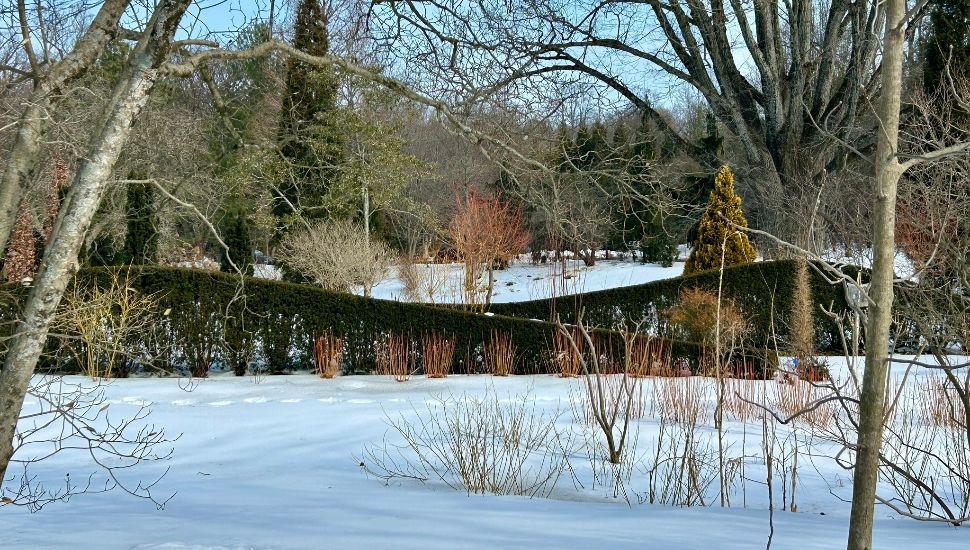
Philadelphia region’s extended snow cover was a mixed blessing, which protected local plant life from the cold while inviting trouble from deer, voles, and snow mold, writes Anthony R. Wood for The Philadelphia Inquirer.
This winter, the region logged 36 days with at least an inch of snow, including 23 straight days starting in late January.
The snowpack was well-timed, said Lisa Roper, horticulturalist at Chanticleer Garden in Wayne, as it “insulated the ground, protecting perennials, grasses, and marginally hardy bulbs” from the subsequent Arctic freezes.
Roger Davis, a landscape manager at Longwood Gardens in Kennett Square, added that “snow cover does not typically cause any problems for most plants in our home gardens.”
But the snowfall has, unfortunately, created issues with deer and voles.
“Heavy snow cover makes it difficult for deer to find food,” said Roper. “The deer will start to eat plants they typically leave alone.”
Voles have also been unusually active underground, consuming everything from roots to the crowns of grasses and perennials. Another concern is snow mold, a fungus that thrives in cold, damp conditions and could emerge during extended snow cover.
Read more about local plant life and how it has been affected by winter weather in The Philadelphia Inquirer.
_______