For generations, Montgomery County’s downtowns developed organically around train stations, factories, shops, and civic institutions. Places like Ambler, Lansdale, Narberth, and Conshohocken grew block by block, gradually becoming the walkable commercial centers residents know today.
Now developers are attempting to accelerate that process, and the scale of what they are proposing is striking.
A New Kind of Downtown
Across Montgomery County, aging malls, shopping centers, office campuses, and oversized parking lots are being targeted for mixed-use redevelopment.
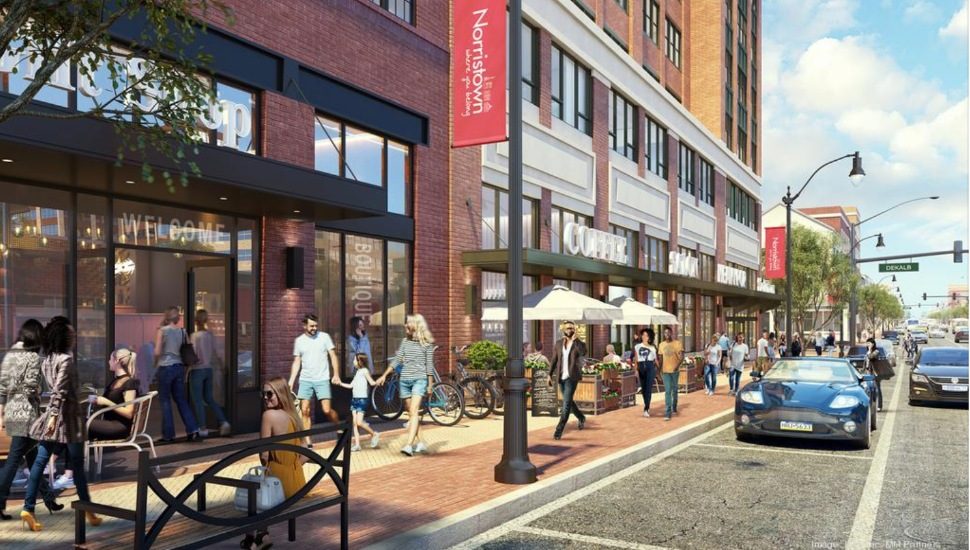
The projects vary widely in size and status. Generally, they share the same promise: housing, stores, restaurants, offices, recreation, and public gathering spaces assembled into something resembling a traditional downtown.
Taken together, the active proposals in Montgomery County alone would add well over 600 new residential units to properties that currently generate little housing at all. That figure doesn’t count projects still in early planning stages.
Plymouth Meeting: The Most Ambitious Bet
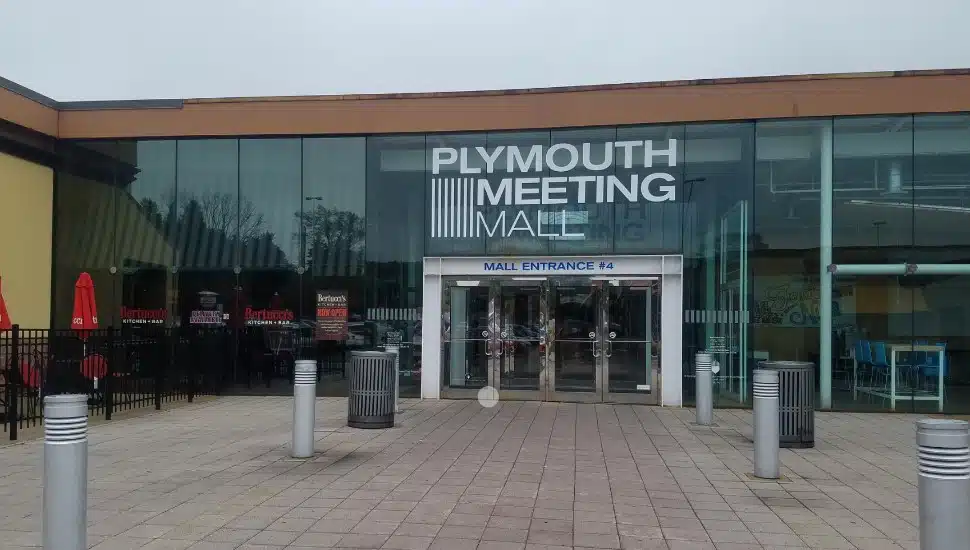
The most ambitious example may be Plymouth Meeting Mall. Philadelphia-based developer LA Partners has proposed investing more than $100 million to reposition the property as Plymouth Meeting Town Center.
Early plans include housing, new commercial uses, entertainment, and athletic facilities. It would transform a mall built around enclosed retail into a broader community destination.
The surrounding property is already beginning to change.
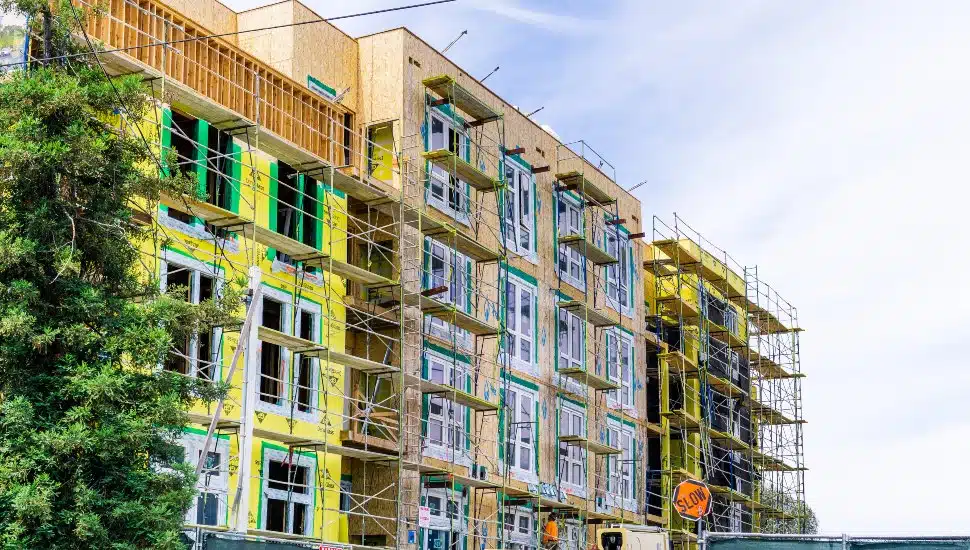
A 60-year-old office building on the mall campus is being converted into 149 apartments. It’s the most concrete sign yet that the future may be less about saving the mall and more about building a neighborhood around what remains.
That project sits along Chemical Road and the busy Plymouth Meeting interchange. The new residents will still be deeply car-dependent despite living within a would-be town center.
Willow Grove: Rebuilding Along Easton Road
A similar transition is underway in Willow Grove, although not at the Willow Grove Park Mall itself.
Federal Realty’s redevelopment of the Willow Grove Shopping Center calls for approximately 262 multifamily units alongside retail and other uses. It would connect through internal roads, sidewalks, and streetscape improvements.
Upper Moreland commissioners approved the plans in 2024.
Township discussions have repeatedly focused on pedestrian connections and building design. Perhaps, more importantly, they want the property to become more walkable. Its location along one of the region’s most heavily traveled commercial corridors makes it a challenge.
Easton Road presents the same challenge these projects face everywhere: adding density is straightforward, but changing how people actually get around is far harder.
Conshohocken: Adding Density to What Already Works
Conshohocken provides a different model. Unlike Plymouth Meeting, it already has a recognizable downtown, a Regional Rail station, and a compact street grid.
New mixed-use proposals are designed to add density to an existing center rather than invent one from the ground up.
Buccini Pollin Group has proposed a $50 million, five-story project near Spring Mill Station with 115 apartments and approximately 5,400 square feet of retail along Fayette Street.
SEPTA has also explored replacing a planned parking garage near Conshohocken Station with an apartment development containing about 300 units, though that concept remains speculative and would require zoning relief or a change to borough rules.
The Conshohocken projects illustrate one of the strongest arguments for mixed-use construction: housing can concentrate near jobs, stores, and public transportation rather than spread across undeveloped land.
How Montgomery County Fits a Regional Trend
Montgomery County is hardly alone in pursuing this strategy.
Across the Philadelphia suburbs, developers are rethinking properties built for an earlier economic era.
In Chester County, plans for the Exton Square Mall envision replacing much of the traditional mall environment with a main street, residences, retail, entertainment, health care, and gathering areas across approximately 75 acres.
Delaware County already offers a more mature example. The former Granite Run Mall turned into the Promenade at Granite Run. It integrated apartments with stores, restaurants, and entertainment. In Bucks County, the 17-acre Dublin Town Center took a smaller-scale approach, combining new townhouses and apartments with commercial space and the adaptive reuse of a former clothing factory.
What makes Montgomery County distinctive is not that it invented the trend, but that so many versions of it are unfolding simultaneously, across property types ranging from regional malls to transit corridors to highway-adjacent office parks.
Why Now
Several pressures are converging at once. Traditional malls have lost department stores and foot traffic. Older office properties face uncertain demand as employers reconsider how much space they need.
At the same time, Montgomery County needs more housing, particularly near employment centers and established infrastructure.
Mixed-use development appears to solve several problems with one plan. New residents can support restaurants and retailers.
Commercial properties can regain value.
Municipalities can add housing without rezoning blocks of existing single-family neighborhoods.
Developers can reduce their reliance on any single category of real estate.
It also raises a question the county’s planning community hasn’t fully answered: whether the roads, schools and utilities surrounding these sites can absorb hundreds of new units simultaneously.
A Town Center Is Not the Same as a Downtown
There is a meaningful difference between a mixed-use project and a true downtown.
Ambler and Narberth work because their shops, homes, streets, transit, and public spaces connect to the larger community.
People can enter from multiple directions, move between blocks, and participate in public life without feeling as though they are inside a privately managed development.
Many of the new town centers will still be surrounded by multilane roads, highway ramps and parking lots.
Their success will depend on whether they connect to nearby neighborhoods or function as self-contained islands where residents can walk internally but must drive almost everywhere else. The region has seen this before: projects that carry the town-center name without ever generating the street life or community identity that makes a real downtown worth walking to.
Can Montgomery County’s developers manufacture in years what its historic boroughs took generations to build?
The coming years will show whether these projects become lasting community centers or simply a new generation of suburban real estate carrying the town-center name.