Before Ken Burns became the United States’ most admired documentary filmmaker, he was a quiet boy growing up in Newark, Delaware, the son of a University of Delaware professor and a mother whose long struggle with breast cancer defined his childhood.
Long before The Civil War, Brooklyn Bridge, Vietnam War, or Mark Twain cemented his reputation, his story began in that modest Delaware tract house, and in a loss that would forever shape his art.
Burns’s father, Robert Burns, taught cultural anthropology at the University of Delaware.
Their home overflowed with books, conversation, and curiosity about the human story, a kind of early film studies education. His father urged him to look at old photographs not as relics but as living memory.
That sense of the still image as a vessel of emotion would later become the heartbeat of the signature “Ken Burns effect.”
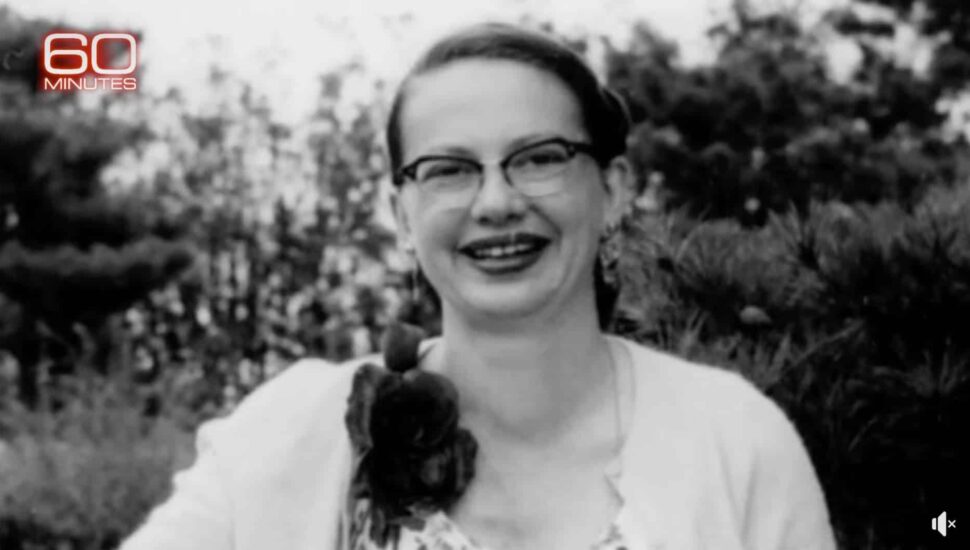
But it was his mother, Lyla Smith Tupper Burns, who defined the emotional climate of the home. Diagnosed with breast cancer when Ken was just three, she fought the disease for eight years before dying when he was eleven.
He’s often called her illness “the great forming force of my life.”
In one of his most vivid recollections, he describes a hot summer night in 1962 in Newark: his mother crying at the dinner table after learning her prognosis. Their working-class neighbors quietly collected six crisp $20 bills to help the family through the month.
“That hot June evening was a victory,” he later said. “I learned about community, courage, and little acts of grace.”
Those lessons stayed with him through high school, college, and eventually his move to Ann Arbor, Michigan.
Years later, his father-in-law, psychologist Gerald Stechler, would offer the insight that unlocked the deeper meaning of his work: “Your whole career,” Stechler told him, “is an attempt to make people long gone come back alive.”
Burns has repeated that line often—including on Nicolle Wallace’s The Best People podcast this fall, adding that his storytelling is “born in tragedy.” Each film, he said, is an effort to wake his mother.
That impulse, to bring history’s voices back to life, runs through everything he makes. Whether he’s chronicling George Washington and the founding of the nation, the haunting battles of the Vietnam War, or the poetic wit of Mark Twain, Burns’s films turn distant figures into familiar friends.
He mines the federal government’s archives and letters, sifts through old photographs, and lets the past speak in the present tense.
His 1990s Civil War series taught viewers to feel history.
His debut Brooklyn Bridge proved beauty could live in black-and-white stills.
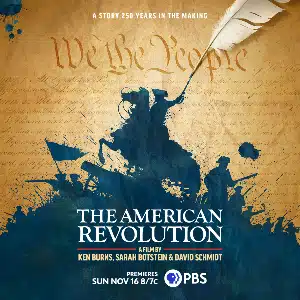
And his forthcoming epic, The American Revolution, may be his most personal yet.
Airing on WHYY for six consecutive nights beginning November 16, The American Revolution revisits the struggle that gave birth to the United States, but through the lens of ordinary people.
Burns and his team trace how courage, sacrifice, and shared ideals transformed farmers, soldiers, and families into a nation.
In many ways, it’s the ultimate expression of what he’s chased since childhood: resurrecting small, human stories within the grand sweep of history.
Through every project, Burns’s purpose remains the same. He makes films not about death, but about resurrection, about how memory keeps us whole. They are, he says, letters to the living and to the lost. “Dear friend,” his work seems to whisper, “we’ve been here before—let’s remember who we are.”
From a kitchen table in Newark to editing rooms lined with reels of the past, Ken Burns has spent his life trying to wake the dead.
And with The American Revolution, he’s once again inviting us all to listen and watch and to feel the heartbeat of a nation still learning who it is.
___________