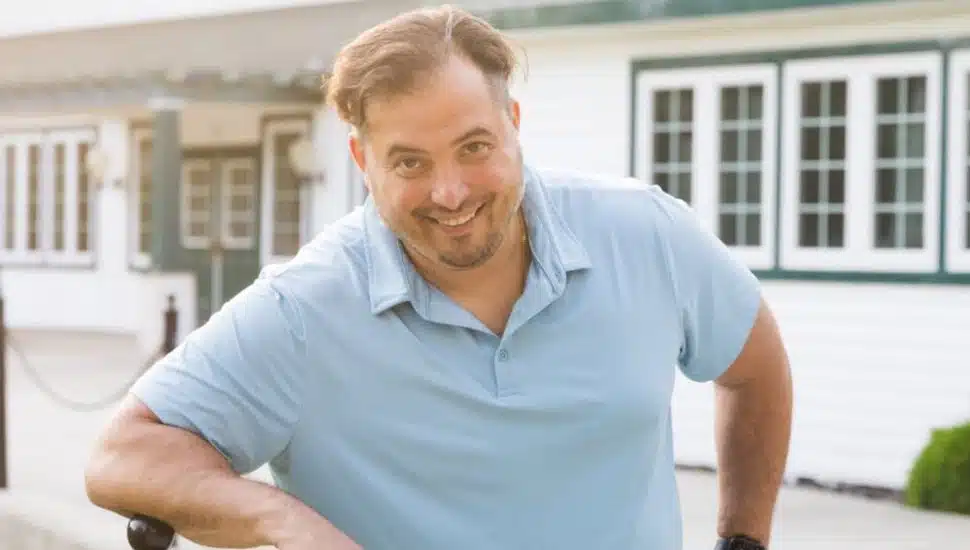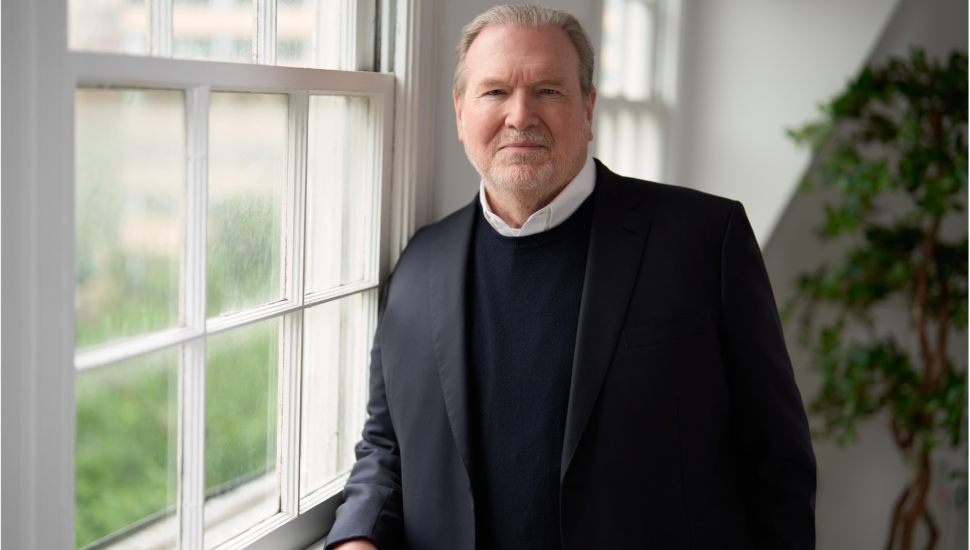
Richard Vague, President of Widehall LLC and Author, spoke with MONTCO Today about growing up in Texas, moving frequently for his father’s job, working his way through the University of Texas, and shifting his focus from visual arts to banking.
Since entering the financial sector, Vague has channeled his curiosity and creative drive into penning multiple award-winning and bestselling books on economics and the history of finance, while serving on the boards of several academic and scientific institutions.
Vague is actively involved in city-level tax reform and recently co-founded Widehall, a D.C.-based communications, public policy, and events consulting firm dedicated to assisting companies with policy-related event planning.
Where were you born, and where did you grow up, Richard?
I was born the second of four children in Wichita Falls, Texas, and grew up in a number of small towns in that state. I went to college in Austin.
What did your mom do? What did your dad do?
Mom was a homemaker, and my dad worked for Exxon. Back in those days, you transferred every one to two years, so that’s what our family did. We lived all over Texas as he went from job to job within Exxon.
What memories stay with you from growing up all over Texas?
We moved a lot, so I was always the new kid in school every one to two years. I had to learn to cope in that context. I had to learn to get along and make friends, and land on my feet.
What did you do to distinguish yourself? What were you good at?
A little bit of this, a little bit of that. I was a pretty good student, and I was always bigger than anybody. I’m six feet and two inches, and I got to that height pretty quickly, so I rarely got into situations where somebody was hostile towards me.
Did you play any sports when you were growing up?
I played a little basketball for a couple of years. I wasn’t that good, but I could hold my own, and I had a lot of fun playing. I always had nice friends, and we did our homework, played driveway basketball, watched TV, and went to bed. Other than moving around a lot, it was pretty straightforward.
Did you play on your high school basketball team?
I did for a couple of years, but I mainly played intramural basketball after that, including in college.
One summer, I took an academic course in upstate New York, after never having been out of state. There was this thing on the courts there, where you’d stand in line and play some guy one-on-one. As long as you won, you got to keep your slot. If you didn’t, you went to the end of the line and waited for your turn again.
I don’t play full court that well, but I played one-on-one as well as anybody. It’s a matter of strength. I remember dominating that northern basketball court as an 18- or 19-year-old Texan.
What’s your go-to shot?
Point-blank lay-up. Get positioned, get the guy out of the way. I had no outside shot.
What about jobs when you were growing up? With all the moving around, were you allowed to work?
Oh, I had to work. I got a job when I was 15 as a busboy at a Denny’s restaurant. I got paid a buck sixty an hour. I got promoted to dishwasher after a few months and was paid a buck eighty-five.
I had to work my way through college, so I did that by working for a dry cleaner. Back in those days, everybody went to the University of Texas or Texas A&M, and they were state-subsidized. I could pay my way without borrowing.
What kind of music floated your boat back in high school and college?
Isn’t that funny, how important music is to folks of that age? I see that in all my kids. But for some reason, I got off on a jazz and classical music tangent somewhere in junior or senior year in high school and was into that for a few years.
Did that come from your parents?
A little bit. Dad had a few jazz albums and stumbled across Miles Davis, and he played a lot of Shostakovich and Copland and Bernstein, and those guys. That was good music.
What about today, Richard? What kind of music do you listen to now?
I’m eclectic. I still listen to a lot of classical music. I’ve been listening to Ravel and Debussy lately. They’re perennials, so it’s hard to go wrong. I have friends who will send me a YouTube link to some new classical piece. But I don’t have a lot of time for that sort of thing.
You were a pretty good student. You could have gone anywhere. Why did you choose the University of Texas?
There wasn’t much of a choice. I bet 95 percent of my class either went to UT or Texas A&M. My dad had gone to UT. It was a great school. There was no way I would have been able to afford SMU or Rice, and I didn’t even know the names of the schools in the northern part of the country. It was never even a subject to consider.
Why UT as opposed to Texas A&M?
Well, there are deep-seated prejudices. If you’re an Aggie, you hate the Longhorns and vice versa. It’s silly.
But also, Austin’s a spectacular place, and the little town that A&M’s located in doesn’t have much in terms of cultural richness. I was always going to go to UT.
What did you major in?
I trained as an Artist from the time I was three or four years old to the time I was 18 or 19. I was a Painter and Illustrator and did almost exclusively figurative paintings. I took all the art classes and entered art contests and won my share of them. It was a given that that’s what I was going to do for my career.
The University of Texas had an Advertising program, which I thought was the commercial application of art, so I got an Advertising degree.
When did you decide to go in a different direction?
I ran out of money halfway through my degree and had to drop out and get a job as a clerk at a bank in downtown Houston. And that was it. From then on, I was in the banking business. It was completely inadvertent.
Any regrets? Are there times when you wish you had pursued a career in the arts?
No. I think what that caused me to do was think about everything from this perspective of invention and creativity. In art, all you’re doing is trying to find new ways to portray and express things. That’s the appeal of a guy like Miles Davis. Every few years, he did something completely new.
My career has given me nothing but opportunities to be creative. It has required that I be creative. So, I get all the creative challenges I could possibly deal with.
I’ve written Economics books, and my book that’s coming out in February is a biography of Thomas Willing, which has been even more of a creative challenge.
No one’s heard of this guy, and he was one of the most important folks in American history. Historians love generals and politicians, but finances — historians largely don’t understand it, so it’s easy to gloss over.
Is there an exception to that rule? Somebody that stands out that historians haven’t forgotten?
Hamilton’s one, but folks ignored him until the musical came out, and he’s one of the few. There’s the Rothschild family in Europe that gets some attention, but most of the financial superstars just get lost.
After college, who were the people who saw promise in you and opened up doors for you?
My whole career has been about folks giving me a shot that I probably didn’t warrant. My first lucky break was that this bank, where I got a part-time job to put myself through school, had just almost failed and been rescued. The new President of the bank, John Tolleson, was a young guy, probably 30 years old, and he plucked me out of obscurity and put me in charge of the marketing and advertising department the day I graduated.
I just had lunch with John a month ago. We sold the business we built together 20 or 30 years ago, but we’ve stayed in touch, and he’s gone on to do wonderful things.
What do you think he saw in you way back when?
I think the issue was a dearth of talent, generally. I don’t think he looked around and said, “Oh, my God, this guy’s fantastic.” I think he looked around and said, “Oh, my God, there’s nobody to help me.”
The institution had just been ravaged. It had barely hung on, and John was trying to put the pieces back together. The stars didn’t want to work for that bank. He generally had has-beens running most of the departments, so he picked me because there were no better options. But he took that bank to amazing heights.
Who else saw promise in you?
Well, I had John as my guardian angel for 15 years. Since then, when I’ve had my own businesses, it’s been investors or potential clients that took a chance on us.
The second business we started was a bank and credit card issuer. We’d had a successful bank prior to that, but we were starting from scratch. We had no capital and no customers. We needed to sign a big relationship, and we called on an airline out of Milwaukee called Midwest Airlines. They took a chance on us. If they hadn’t, we’d probably have failed.
We were in Wilmington, and they were going to call us from Milwaukee and tell us whether we got the business. We had gotten every indication up to that point that it was going to be us, so we had the confetti ready.
And the call didn’t come. We’re sitting there looking at each other, saying, “We’re screwed.” And then we get this call from a cell phone, back when you could tell the difference. And the guy said, “Look outside.”
So, we went to the window and looked outside. He and his colleague had flown in and rented a car. They were in the parking lot and had a huge banner saying, “Congratulations!” I’ll never forget that.
Here we are in the third Quarter of 2025. What are you focused on? What are your priorities?
We started a policy event business in D.C. about a year ago that is growing great guns. We have a dozen or so Fortune 100 companies that pay us to hold policy events on their behalf in D.C. to burnish their brand and advance their policy objectives. It’s with a guy I’ve worked with for a while, and it took me 10 years to talk him into leaving the bosom of a big media company for us to do this on a standalone basis. That’s been enormously fun.
I’ve got this new book on Thomas Willing coming out in February, so we’re tying up the loose ends and getting ready for the book tour.
And I’ve been doing work with the city on tax reform. That’s taken quite a bit of time over the last year. I’m not sure I’ve ever been busier than I am now.
What do you do with all your free time?
I think I just described it. My wife and I have six kids to keep us busy, so if in the middle of all that I can sneak in a Phillies game, that about fills it all up.
Are you more a Phillies fan than an Eagles fan?
No, baseball is an enjoyment for me, but I don’t know all the players and statistics. Like golf, it’s one of those sports where you can watch but not watch. You can catch up on stuff while you’re watching, so it’s soothing.
I see all these books behind you; do you have a favorite author?
I read around topics rather than authors. Right now, the next book I’m going to write is about the origin of the Bank of England and of the modern financial system.
For the Thomas Willing book, I probably ended up reading 200 books around that subject. I haven’t even started on this one, and I’m probably already 20 books in.
When you think about the Bank of England, you think of this state institution that must have been created in this very orderly way. Nothing of the sort. It was an extraordinary time of chaos.
Three last questions for you, Richard. What’s something big that you’ve changed your mind about over the last 20 years?
I grew up in a Republican household and took all the free market stuff for granted. I assumed Milton Friedman was the apostle of all economic wisdom. Over the last 20 years, I’ve had a radical reversal in my economic thinking.
If I have an avocation, it’s economic research, and I’ve found from my empirical investigations that most of the things that those guys claimed ended up not being true. Markets don’t always create a wonderful solution. It’s almost always the opposite. I’ve studied that back to 1791.
That’s one area where I’ve changed, and I wasn’t expecting that. I would have been just as happy to reach the opposite conclusion.
How do you stay hopeful and optimistic? It’s a crazy world out there.
I have nothing but optimism. Everywhere you look, there’s invention and creativity.
I’ve had the privilege of being associated with Penn Medicine and the research group over there, which is about 2,000 scientists large and perhaps a billion dollars a year in expenditure.
Penn just had a couple of guys hit on some unbelievable things. Carl June came up with this idea about using the HIV vehicle to deliver altered DNA to the cancer tumor to successfully cure certain types, and that has blossomed. And then Drew Weissman and Katie Karikó came up with the idea that they could build things like vaccines with mRNA.
The possibilities for both those discoveries are unlimited. You can’t leave there and go back two weeks later without something new and significant having happened. And that’s not just true in medicine. We see that in almost every area.
Finally, Richard, what’s the best advice you’ve ever received?
When John Tolleson became Chairman and I was CEO, he said that my goal should be to have nothing but free time. That I should hire people and delegate everything. He said, “Unless and until that’s true, great things aren’t going to happen in the company, because that’s when you start dreaming up new stuff for us.”
I was flabbergasted, because you come to define your value by how much you’re doing. It took me quite a while to get my head around that, but at the end of the day, I concluded that it was spectacular advice, and it did result in a heightened level of creativity and achievement.
Publisher’s Note: Helen Harris assisted with this profile.