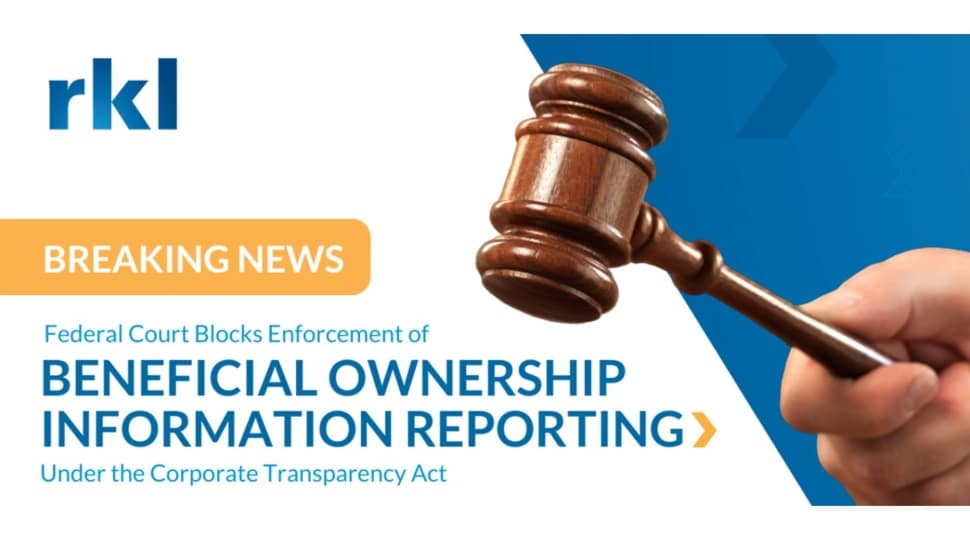

It’s time to sharpen those pencils — Beneficial Ownership Information (BOI) Reporting is once again enforceable. Following a lifted injunction, FinCEN (Financial Crimes Enforcement Network) has set a new deadline of March 21, 2025 for most entities required to file.
On Feb. 17, a Texas District Judge lifted their own injunction that was issued on January 23, coinciding with the day the Supreme Court issued a stay on the previous injunction. This decision allows the Corporate Transparency Act to take effect while additional appeals and legal challenges are being processed.
What’s Next for Businesses?
Most businesses formed before mid-February would be subject to the updated March 21, 2025 deadline. For businesses that qualify for disaster relief extensions, additional time may be granted for filing their beneficial reporting information. New businesses established within 2025 are now required to meet a 30-day filing deadline.
Companies are advised to consult with their legal representatives or BOI reporting team to determine the applicability of this reporting requirement and gather the necessary information. Although RKL cannot provide filing services, we have prepared a BOI Reporting summary to help companies identify if they may be subject to this new reporting.
What’s Next in the Courts?
More than a dozen lawsuits have been filed across the United States, challenging the constitutionality of the Corporate Transparency Act, which mandates the reporting of ultimate beneficial owners. While several lawsuits have already been ruled in the government’s favor, others continue to navigate the appeals process.
Although the Supreme Court has previously lifted an injunction, it has not formally issued a judgment on the constitutionality of the reporting. It is anticipated that that BOI requirements will ultimately land on the Court’s desk before the constitutionality is finalized.
What’s Next in Congress?
As the issue progresses through the courts, Congress is also considering a bill to grant a one-year extension for businesses formed before Jan. 1, 2024. The extension would postpone reporting until Jan. 1, 2026 for most businesses. This legislation, known as the HR736: Protect Small Businesses from Excessive Paperwork Act of 2025, was unanimously approved in the House on Feb. 10 and is now awaiting Senate consideration.
Additionally, another bill aiming to abolish the Corporate Transparency Act has been introduced. While HR736 has received bipartisan support, so far only Republican party members have formally co-sponsored this second bill, which currently remains in committee.
The fate of both of these bills is currently uncertain.
_________________

Kirsten T. Deeds is a Partner and International Tax Leader at RKL. She has more than two decades of experience in international tax and provides specialized services, including U.S. taxation of foreign earnings, ASC 740 tax provision work, corporate U.S. compliance, due diligence for mergers and acquisitions, and transfer pricing.