The artificial intelligence boom is no longer just a technology story. For Audubon’s PJM Interconnection, it may become an existential one, according to Bloomberg.
For Pennsylvania ratepayers, including those in Montgomery County, the consequences are already showing up in electricity bills.
The Grid Under Pressure
PJM, the nation’s largest electric grid operator, manages power across 13 states and Washington, D.C., serving roughly 67 million people from the Midwest to the Mid-Atlantic.
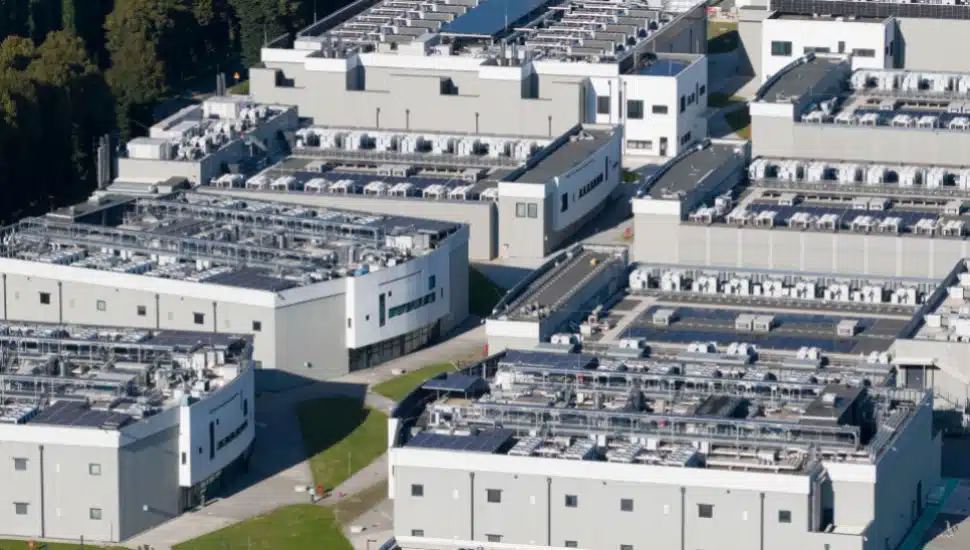
But the rapid rise of data centers, especially in Northern Virginia’s “Data Center Alley,” is straining the organization’s ability to balance reliability, affordability, and future growth.
After decades of relatively flat electricity demand, PJM now faces a surge from power-hungry computing centers that require massive, always-on electricity supplies.
The numbers tell the story: wholesale power prices on the PJM grid rose 76 percent in early 2025 compared to the same period the prior year, while capacity costs jumped nearly 400 percent.
Data center growth has added more than $23 billion to capacity market costs since 2025, according to PJM’s independent market monitor.
A Pipeline That Can’t Keep Up
The scale of what’s coming makes those numbers look modest. PJM recently received applications representing roughly 220 gigawatts of proposed new projects for its next interconnection cycle. That’s more than the grid’s entire current summer peak capacity of around 154 gigawatts.
The problem is that getting those projects online is painfully slow. Projects entering service in 2025 took an average of more than seven years from start to finish.
The biggest delays occurred not in the approval process but afterward, as transmission buildouts and supply chain bottlenecks stall construction.
Pennsylvania Sounds the Alarm
That demand is intensifying pressure on households, businesses, regulators, and elected officials.
Pennsylvania Governor Josh Shapiro, whose state is the largest electricity exporter in the country, filed a formal complaint with federal regulators, warning that Pennsylvania ratepayers face what he called potentially “the largest unjust wealth transfer in the history of U.S. energy markets.” Shapiro has since threatened to pull Pennsylvania out of PJM entirely if the problems go unresolved.
Breakup Threats and Market Debate
The result is a growing debate over whether PJM can continue operating as currently structured.
Federal officials have raised the possibility of breaking up the organization if reforms do not move quickly enough.
Multiple states have echoed Pennsylvania’s frustrations, while American Electric Power has signaled it may exit PJM entirely over the slow pace of connecting new generation to the grid.
At the center of the debate is PJM’s capacity market. Critics argue the system has not moved fast enough to bring new generation online.
Meanwhile, PJM leaders warn that holding down consumer prices could make it harder to attract the power plants needed for future reliability.
What Comes Next
Data centers may force PJM to rethink nearly every part of its model.
How will large users connect?
Who pays for new power supply?
Should tech companies should fund long-term generation?
How much demand can be added before the grid becomes unstable?
For Montgomery County residents and millions of others across the PJM region, the question is no longer abstract.
Can the grid keep up with the AI economy without making electricity unaffordable for everyone else?
Read the full story on PJM’s stake in the future as data centers ramp up the need for energy in Bloomberg.