In 1896, University of Pennsylvania physicist Arthur Goodspeed took images of coins inside a small purse, images that became the precursor to what we now all know as X-rays.
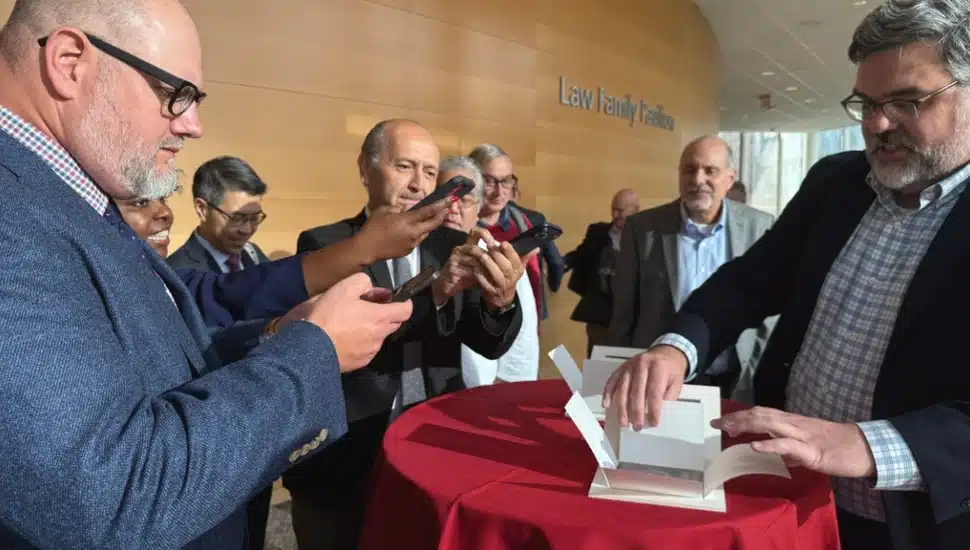
As his descendants stumbled upon a box of his stuff, they found those images along with various artifacts that they have decided to donate it back to the university, writes Nicole Leonard for WHYY.
Dr. Pari Pandharipande, chair of the Perelman School of Medicine’s Department of Radiology, said that while Dr. Goodspeed knew the potential for his new technology, there was no way to know it would lead to so much more.
His accidental X-ray discovery has since led to MRIs, ultrasounds, CT scans, and much more.
Years prior when Goodspeed and photographer William Jennings first developed the X-ray plates, they couldn’t explain what exactly they saw, but knew it was something.
“He knew something happened and ‘I might want to look at this someday’ sort of thing,” University of Pennsylvania archivist John Bence said.
It wasn’t until German scientist Wilhelm Conrad Röntgen became credited with discovering X-rays and winning a Nobel Prize that Goodspeed realized he had the concept first.
From there, he quickly partnered with Penn surgeon Charles Lester Leonard to apply X-rays to people, and the rest is history.
Read more about Arthur Goodspeed and how he accidentally credited X-rays at WHYY.
_____