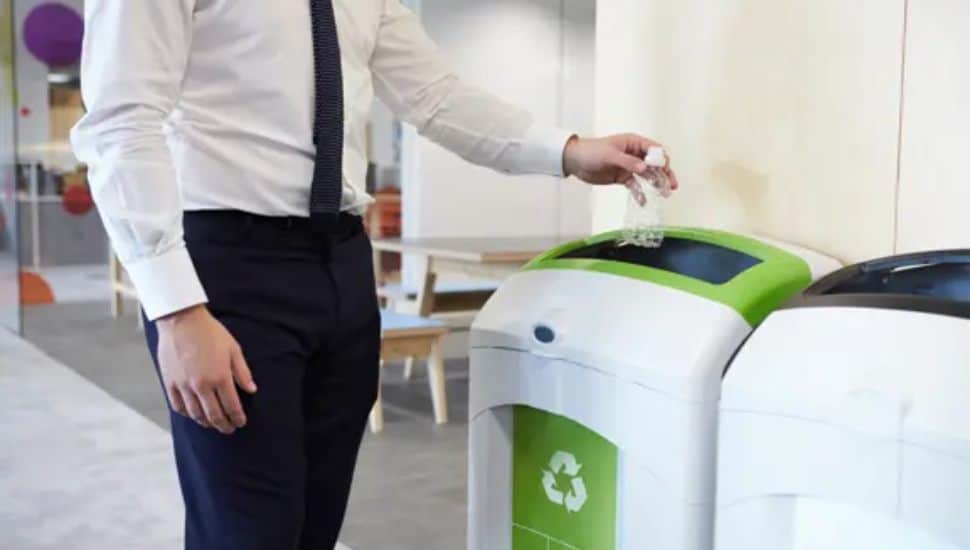

Now more than ever, green business is good business.
In recent surveys of young consumers, a large majority of respondents said that business innovation would play a key role in solving the urgent environmental challenges we face today. There is substantial public pressure on major corporations to reduce waste, pollution, and nonrenewable energy use — and many have heeded the call with ambitious commitments, like the 200-plus signatories of the Climate Pledge that aim to reach net zero carbon by 2040.
But America’s small enterprises — which comprise over 99 percent of all businesses and employ nearly half the workforce — can play a vital role as well. And meaningful change doesn’t have to happen all at once. First Bank has put together a list of eco-friendly action items that can also have a positive impact on team well-being, community goodwill, and the bottom line.
1. Encourage remote work. The COVID pandemic demonstrated that a low-commute workforce can be highly effective. Bringing that lesson forward is good for employees and good for the environment.
2. Go paperless. More and more customers appreciate fully digital transactions, and businesses save on the cost of stationery, toner, and postage, as well as the space needed for filing cabinets.
3. Choose certified office paper. When printing is necessary, purchasing office paper certified by the Forest Stewardship Council with the highest percentage of post-consumer recycled content and wood fiber is a responsible choice.
4. Make e-recycling a habit. Beyond standard recycling, businesses should ensure that old computers, monitors, batteries, and other electronic waste are responsibly disposed of.
5. Explore transit incentives. Many municipalities offer free or subsidized transit passes for small businesses. For on-site employees, incentivizing alternative transportation methods can meaningfully reduce carbon emissions.
6. Switch to LEDs. Swapping out incandescent lightbulbs for longer-lasting LEDs is one of the simplest energy upgrades a business can make. Traditional bulbs expend 95 percent of their energy on heat, with only five percent used for light. LEDs can save hundreds on electric bills.
7. Adopt a local cause. Committing to an annual day of service tied to a local green-friendly cause advances a worthy mission while creating team building and marketing opportunities.
8. Rethink packing materials. For businesses that sell and ship products, reducing excess landfill-bound packaging is appreciated by customers — and often by the budget as well.
9. Schedule a free energy audit. Many municipalities and utility companies conduct no-cost business energy audits, making it easy to identify fixes and swap-outs that reduce both emissions and operating costs.
10. Add plants. Making a workspace literally greener by adding plants can absorb pollutants and create a more vibrant, welcoming environment for both staff and customers.
11. Practice smart water management. Installing low-flow fixtures and monitoring water use for sanitary, landscaping, and manufacturing processes are straightforward steps toward meaningful conservation.
12. Move to opt-in mailing lists. Renting mailing lists generates significant marketing material that often ends up in landfills rather than reaching a relevant audience. Opt-in lists are more effective and more sustainable.
13. Buy sustainable banners. When signage is needed, ordering banners made with recyclable materials and printed with water-based ink is a simple way to reduce environmental impact.
14. Upgrade to a smart thermostat. Programmable thermostats allow businesses to fine-tune energy use from an authorized mobile device, making it easier to reduce waste without sacrificing comfort.
15. Seal electrical outlets. An eighth-inch gap around six outlets is the heat-sucking equivalent of a four-inch hole in an office ceiling. A few sprays of non-expanding latex foam can close that gap and cut energy loss.
Implementing even a handful of these steps can help reduce operating costs, attract and retain top talent, and appeal to cause-driven customers — while making a real difference for the environment.
Learn more about how First Bank supports the small businesses that power local communities. From everyday banking needs to growth-focused financing solutions, First Bank is committed to helping business owners succeed. Visit First Bank or stop by a branch near you to explore business banking solutions tailored to your goals.