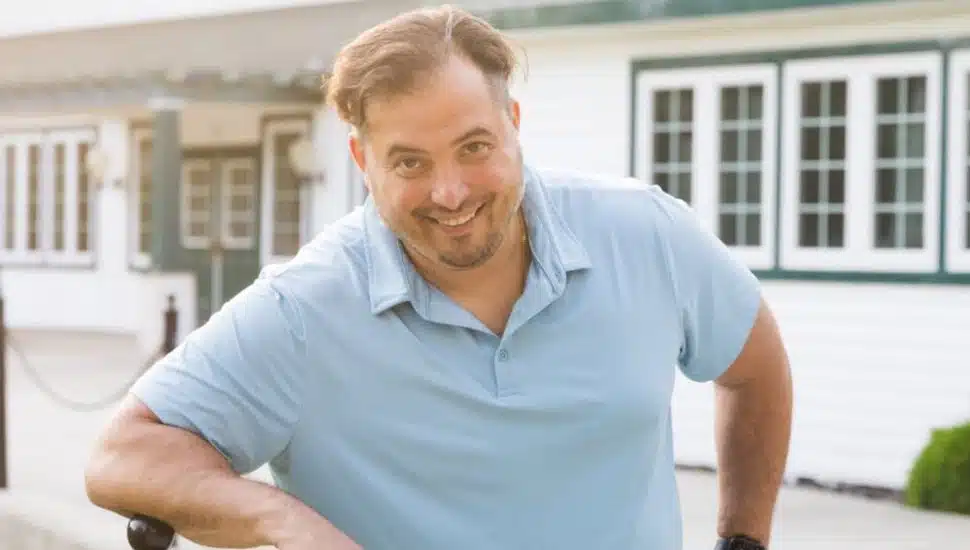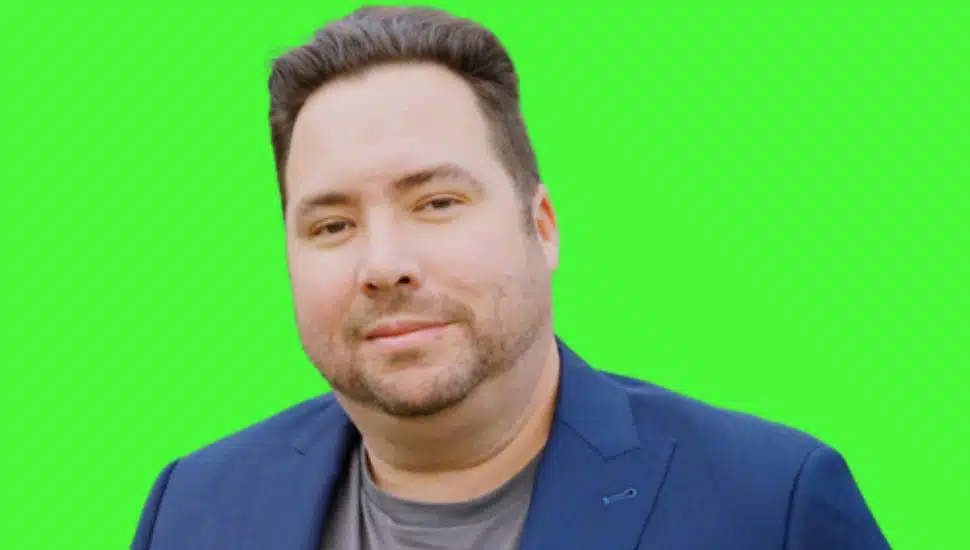
Chris Heffernan, CEO of dlivrd, a Horsham-based last-mile delivery and logistics firm that connects restaurants around the world with independent local drivers for on-demand meal and catering delivery, spoke with MONTCO Today about growing up in Glenside, building a career in telecommunications and the restaurant industry, and finding success outside of traditional secondary education.
Under Heffernan’s leadership, dlivrd was named to Inc. Magazine’s 2024 Best in Business list, a national recognition of companies making an extraordinary impact in their fields and communities.
After pioneering an online food delivery service before the era of DoorDash and Uber Eats, Heffernan pivoted to facilitating large-scale scheduled catering through the dlivrd app.
He’s now working on acquiring even more tools to help restaurants deliver experiences outside of their own four walls and handle all their logistics in one place. He also has a passion for philanthropy, particularly helping young people succeed in the trades and entrepreneurship.
Where were you born, and where did you grow up?
I was born in Glenside, and that’s where I still live now. I can see the house I grew up in from the back deck of the house I live in now.
What did your mom and dad do?
My mom worked in Abington Hospital, which a lot of the community back then did. She did scheduling and accounting for visiting home nurses.
My dad had a cell phone and pager store, back when nights and weekends were free, and you had a 200 text message limit. He was also a cop and a 911 dispatcher.
Where were you in the pecking order?
I’m the oldest of two. I have a sister three years younger than I am. I was the jokester, the troublemaker. She was the artsy type and into music and drawing.
What memories stay with you from growing up in Glenside?
Walking up Keswick Avenue and getting candy from the candy shop or toys from the toy store. Riding bikes through the creek in Renninger Park and summers going to Penbryn Pool. The community and the people.
Did you play any sports when you were younger?
I dabbled in soccer for Hunter, the local league, and then I played lacrosse for the Abington Lacrosse Club for one and a half seasons. I met a lot of lacrosse players at summer camp and thought it seemed cool, because it’s fast-paced.
But organized sports were never really my thing.
How did you distinguish yourself in high school?
I tried to fly under the radar, go to school enough to not get kicked out, and get good enough grades to not have to repeat a year. I’d say I was undistinctive.
What about jobs in high school? Were you allowed to work?
Yeah, I was encouraged. I spent some time at my dad’s cell phone store and scooping ice cream at Glen Dobbins on Glenside Avenue. That was my first real job at 14.
Then I went into the restaurant industry as a busboy and dishwasher. A lot of what I learned there was how to interact with people, whether it’s customers or workers. Those are things I carry with me into what I’ve built in my company.
What about music? What kind of music floated your boat?
Mostly rock and alternative. The radio station was Y100. Last weekend, I went to the Creed concert. They did a return tour, alternative music, which I would have listened to back then.
Did you go to a lot of concerts when you were a kid?
Our family didn’t have a lot of extra income. We had our week down at the shore in the summer and pizza on Fridays. Not a lot of concerts or extra activities. Even now, it’s a lot of money. A concert ticket could be a flight to Florida.
What did you do after you finished high school? Did you go to college?
I tried for a few semesters at MontCo, but it’s not for me. It wasn’t for me in high school. It wasn’t for me in post-secondary education.
I landed working at a telecommunications company, selling cell phones like I did when I worked for my dad. I did that for nine years post-high school.
Looking back, was that the right path for you?
Yeah. I think college has its place for people who want to be a doctor or a lawyer or follow a path that requires that education. But there are so many ways to be successful — plumbers, electricians, the unions, and entrepreneurship. To think that you need a four-year degree is, I think, an antiquated ideology.
I sponsor a scholarship at the high school where my wife used to teach, for kids who are not going to a four-year program. It’s for trade school, community college, or entrepreneurship. We gave out three of those scholarships last month to graduating seniors.
So many of my friends went to college and now have careers unrelated to their field of study. That’s not failure — that’s growth, adaptability, and figuring out what actually fits.
In the early days of dlivrd, our hiring mindset was unconventional by design. A four-year degree wasn’t a requirement; in fact, it almost felt like a disqualifier. Community college dropout? Perfect. You’re the VP of something. What we were really after was that scrappy, startup energy — people who weren’t boxed in by job titles, but driven by vision and grit. We’ve always looked for builders, not resumes.
We have a mural on the wall that says, “The most dangerous phrase in the English language is, ‘We’ve always done it this way.’” It’s a quote often attributed to Rear Admiral Grace Hopper of the U.S. Navy. It’s a powerful reminder that we should constantly seek new and better ways of doing things — continuing something just because “that’s how it’s always been done” is rarely a good reason.
When did the entrepreneurial bug bite?
It’s always been there, but it really bit when I was on vacation in Delray Beach, Fla. I was driving down Atlantic Avenue and stopped to check out a Philly cheesesteak place called Big Al’s. Being from the Philly area, I was like, “Is it a real Philly cheesesteak?” It was, and it was good. They overnighted their rolls from Liscio’s. You ordered your cheesesteak at one window, your fries at the other, very like Pat’s and Geno’s.
There was a sticker on the door that said, “We deliver with Delivery Dudes.” This was in 2011, before DoorDash or Uber Eats existed. I asked Big Al what Delivery Dudes was, and he told me about it.
Nothing like Delivery Dudes existed in the Abington area, so when I came home, I built a website that was made to sell shoes, but instead of ordering a Nike size 10, it was a burger cooked medium well. It was called Food Cab. And I started selling it to a handful of restaurants.
That same year, I got a new boss, and he was such a jerk that I quit and walked out the door, no notice. That was my jump into entrepreneurship, and I never looked back.
Food Cab had a good run, but by 2018, Uber Eats and DoorDash were destroying my business. I was at the Boston Market in Abington, and the manager there was like, “Hey, it’s great that you’re bringing me this $25 order, but I need help delivering these pharmaceutical rep orders. They’re $250. They all come in at the same time, all going different places.” And I was like, “I can absolutely do that.”
And then 2020 changed the whole model of our business. We went from Food Cab, the app where people ordered food, to dlivrd, the app that powers the logistics to deliver large-format ordering. And that was something that DoorDash and Uber Eats weren’t really working on.
From the time you finished high school to today, who are the people who saw promise in you?
My gut reaction is nobody.
But there was my 10th-grade public speaking teacher. I was good at talking to people, from working in sales and restaurants. I could get up in front of a classroom and talk confidently about whatever, which is unique for a high school kid. She probably saw something in me.
That same grade, my social studies teacher might have seen something. Like, “When you show up to class, and you’re not trying to be funny, I know you know what you’re talking about. Get your act together.” He went on to be the principal of the senior high school.
Have you gotten your act together yet?
I’d say so. I became a real adult at some point. Now I focus on philanthropy, giving back to different organizations and communities. And I don’t have to be the funniest person in the room. I focus on what I want to focus on. I think the freedom of that changed my mentality.
I don’t know anything about dlivrd, Chris. Give me your elevator pitch.
dlivrd is a last-mile logistics company that helps brands connect with their customers in 180+ markets across the U.S.
It all started right here in the suburban Philadelphia area, with that Boston Market in Abington, and then went from Philadelphia to Baltimore to D.C. to San Francisco, all the way to places like Ardmore, Oklahoma. Wherever there’s demand for orders to be delivered, our clients have brought us.
Why do you think it’s grown like it has?
I think there’s a real need for what we offer. When we first started in 2018, everything was, “I want a burger and I want it now.” There was no technology for “I want a burger bar, and I want it on Wednesday at 12:15.”
Building that and being an early adopter of it helped. And a lot of it is the camaraderie we build with our employees, drivers, and clients. A lot of them work with us because of the team, and we genuinely care about them.
What does the rest of the year and into 2026 hold for you? What are you excited about?
We have some acquisitions tentatively expected to close by the end of the month that will expand our international footprint. These moves will help restaurants scale into new verticals, while also enabling us to serve markets beyond the U.S. A lot of brands — especially post-pandemic — rely on delivering experiences to customers beyond their four walls. But many still struggle to optimize those efforts without relying on the predatory fees of platforms like DoorDash and Uber Eats.
We’re acquiring different tools to help them with social media, online ordering, review management and feedback, and chargebacks from third-party players. We call it “building the moat” around a customer to protect them with their off-premises ordering. The idea is to empower them with the tools, so they can go to one place instead of partnering with 10 different people who do different things.
We realized this year that, in the business delivery space, delivering early is just as bad as delivering late, if not worse. So, we’re working with our partners to refine those metrics.
It seems like a silly thing to be excited about, but we’ve seen almost an 18 percent increase in our KPIs, our key performance indicators. I’m excited to keep growing in that and providing better service for the clients and their end customers.
How many people run dlivrd from your Glenside headquarters?
There are about a dozen of us in Glenside and another 18 working remotely across the U.S.
And then we have a development team of eight in Pakistan and a customer service team of about 60 in Central or South America.
A lot of the drivers on our platform, especially in Southern California, Florida, and Texas, speak Spanish. So, having a bilingual support staff is a great advantage for us.
What do you do with all your free time?
I dream about other businesses that I could start up or buy. I hang out with my cat. I love to travel. I just turned 40 in May, and I was able to visit 40 countries by the age of 40. Having a business powered by my laptop helps me with that.
Where’s the best or most memorable place you’ve been to?
The one that sticks out the most was Vietnam. The street food, the history, everything wrapped together, how nice the people were. And it was cheap, so that was neat.
It was my first time going to that side of the world, and I had a great experience. The food was phenomenal. The journey of the business started with a cheesesteak, so obviously, food’s a cool piece of my life and my story.
Looking at the streets, there are hundreds of motorbikes and no traffic lights. You just slowly walk across the street, and everybody merges around. If you’re frantic and you run or don’t step confidently enough, you’ll get hit. But there’s this mutual respect, like, “I’m going, I’m gonna work around you.” It was so interesting and crazy.
Three last questions for you. What’s something big that you’ve changed your mind about over the last 20 years?
I think back to the high school version of myself, the one who would crack jokes at others’ expense, do whatever it took to get a laugh, and mostly just looked out for myself. That’s changed. These days, if someone’s being excluded or torn down to make someone else look better or get a laugh, I won’t stand for it, joke or not. I used to be that guy as a teenager, and honestly, I could have stayed that way. But growth means choosing better.
What was the turning point for you? Where did you find that empathy?
It slowly chipped away at me. But I think a lot of it came from growing this business, and more people relying on me to not be that person. If I make a bad joke in front of a big client, they’re going to take their business away. And that puts five, 10, 50, and a hundred people’s livelihoods at risk.
What keeps you hopeful and optimistic, Chris?
Seeing other places. There are a lot of things that, as a community, as people, we can point to and say, “The world’s doomed because of X, Y, or Z.” But we’re looking at it through such a narrow lens. We look at it in the community of Abington, in the city of Philadelphia, in the state of Pennsylvania, or even in the country of the United States.
But if you sit back and look, there are problems everywhere, but there are also great things happening everywhere.
I was walking through Jenkintown, and I saw an Amazon truck stop. The driver put his flashers on, got out, and helped a blind guy cross the road. He didn’t have to do that. He could have just stopped at the stop sign and kept going.
I look for those little glimmers. There are horrible things happening in the world, and there will always be bad people, but there will always be good people, too.
Finally, Chris, what’s the best advice you’ve ever received?
It was from my dad, when I was starting my entrepreneurial journey, and it was, “Just get out there and do it.” There’s always an excuse to not do something that requires risk or fear. Just do it, just get started. That’s what I tell people all the time. If you want to start this business, pivot to this, try that, figure out a way to just do it.
_______
Publisher’s Note: Helen Harris assisted with this profile.