It’s a hot summer day. Sweat trickles down your back. Clothing clings to your damp skin.
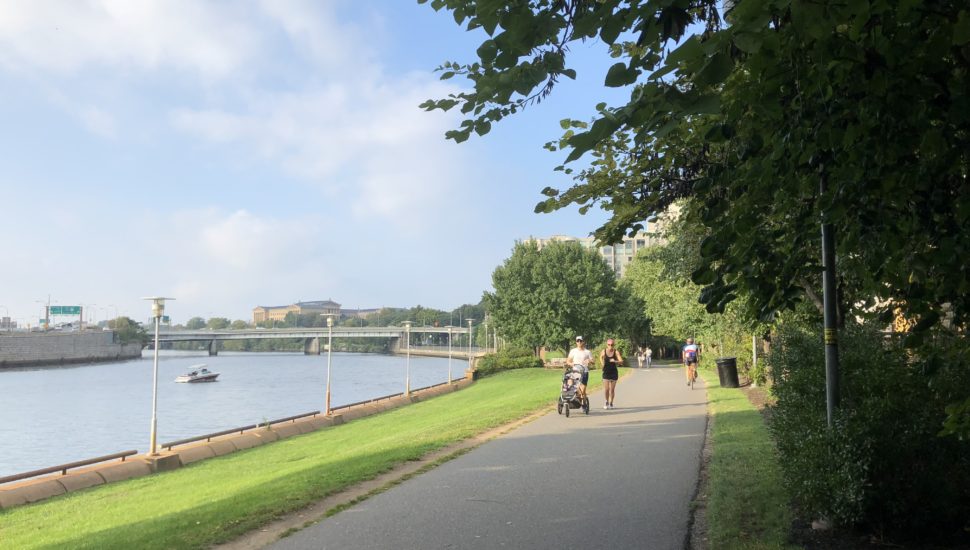
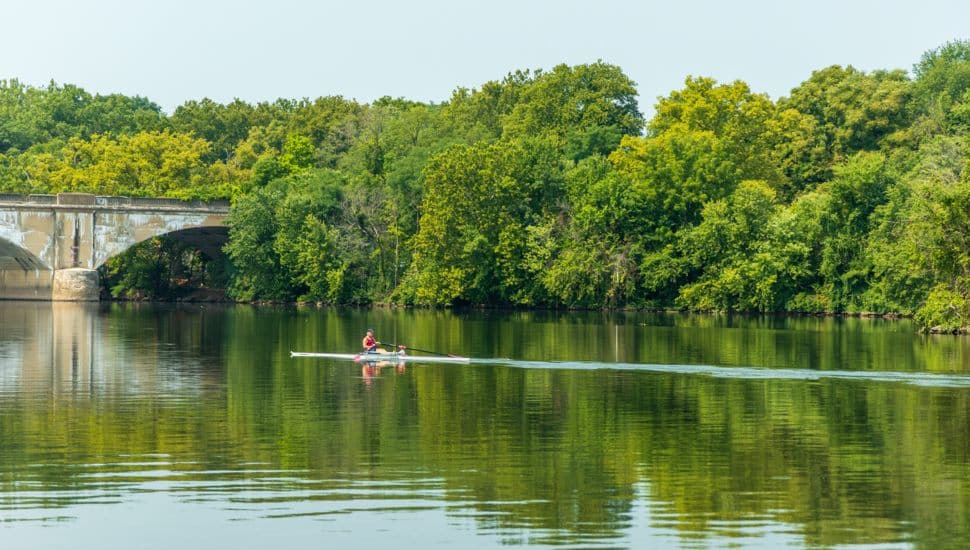
You gaze at the Schuylkill River, longing to dive into her cool waters.
Wait. What do you mean, no?
Okay. The Delaware then.
Still nothing doing, huh?
That’s what I thought.
When it comes to recreation on the water, the Schuylkill and Delaware Rivers may not top your list.
But here’s the thing.
For many locals, those Philadelphia rivers do top the list.
So why do the Schuylkill and Delaware Rivers have such bad reputations? And more importantly, how do we fix that?
First Things First
There’s a difference between recreation on the water and recreation in the water.
Visit Philadelphia offers a list of activities on the water in Philadelphia. For example, City Cruises runs out of Penn’s Landing all year long.
Or, for something a bit more exclusive, Sea Philly has cruises for you and five of your closest friends.
Fishing (yes, fishing) is a pastime at Pennypack on the Delaware, Lardner’s Point Park, and Pulaski Park, but just make sure you have a license.
Independence Seaport Museum has kayaks for rent, Penn’s Landing Marina has paddle boats, and tubing on the Delaware is, in fact, a thing.
Back in 2014, the Huffington Post billed the Spruce Street Harbor as one of the best urban beaches in the world, right up there with London and Paris.
Then there’s this epic list from Philadelphia Magazine. At Glen Foerd in Northeast Philly, canoes, rowboats, and kayaks are waiting to help you explore the Delaware. Hidden River Outfitters will get you out on the Schuylkill in a kayak.
Philadelphia Magazine’s list is so lengthy, it’s hard to excuse our collective scoffing of the city’s iconic rivers.
Until you think about swimming in them.
While the Clean Water Act of 1972 did a lot to freshen up Philly’s rivers, The Philadelphia Inquirer explains that “except during organized events such as triathlons, because of the risk of bacterial infections, drowning, fishhooks, and strong currents,” swimming is not permitted.
Is it really that bad?
According to The Inquirer, yes. Even paddling is barred sometimes because of the fluvial bacterial levels.
Ick.
The Inquirer goes on to explain that contaminated runoff into the Schuylkill and Delaware Rivers can’t be properly purified by the Philadelphia Water Department’s current filtration systems. While the stuff coming from our faucets is potable, the stuff in the rivers is far from it.
So, recreate on the water? Yes … usually. Recreate in it? Not so much.
Then There’s The Bad News
The Schuylkill and Delaware Rivers’ reputations are fighting against more than just “bacterial infections, drowning, fishhooks, and strong currents.”
As if those weren’t bad enough.
WHYY explains the battle royale between recreational users of the rivers and the rivers’ commercial users. Cargo ships, barges, and tugboats sojourn on the Delaware all year. The commercial boating industry has very real concerns for the safety of those using the river for pleasure. Never far from anyone’s mind is the 2010 duck boat collision.
Then there’s the upkeep.
According to the Environmental Protection Agency, in addition to treating that contaminated stormwater runoff, boosting the rivers’ entry points and making the rivers healthier in general are perpetual projects.
And WHYY noted in 2019 that toxins not addressed by the Clean Water Act, like medications and plastics.
As bad as all that sounds, worse is all those website and magazine rankings.
In 2024, USA Today suggested you “make a splash” in Lake Erie — not the Schuylkill or Delaware Rivers.
This year, MSN.com did list the Delaware as one of “America’s most beautiful rivers” that “will take your breath away.”
But it was the Upper Delaware, in New York.
To be fair, MSN.com, in that same piece, included the Snake River.
No. Nothing called the Snake River is better than Philadelphia’s rivers.
Come on. Just no.
In 2020, Business Insider didn’t include any Pennsylvania-based waterways in its compilation of the most beautiful rivers in the country.
They did, however, include the Snake River. So, really. Should we even listen to them?
US News & World Report, by way of Yahoo! News, curated the “10 Coolest Waterway Adventures” in 2018.
Neither Philadelphia’s rivers nor the Snake River made the list.
Which feels weirdly satisfying.
Whether it’s the contamination or the old Philly tropes, neither the Delaware nor the Schuylkill appeals to editors.
The Good News
The problems may feel insurmountable, but other cities have rehabilitated their waterways, providing a nice template for Philadelphia to follow.
The EPA feels the socioenvironmental issues facing Philadelphia’s rivers demand attention on both the macro and the micro levels.
That sounds easy.
WHYY gets more specific. Failing federal action to build out the Clean Water Act, local government may need to step in with its own regulations.
In other commentary from WHYY, it’s noted how difficult it is to get the Delaware free of those pesky bacteria inhibiting swimming. Retooling stormwater drains to strain the infectious little guys is prohibitively expensive and can’t be prioritized when the city is still replacing lead pipes.
But University of Pennsylvania researchers tell WHYY that smaller projects, like focusing cleanup on waterways leading into the Delaware, for example, or engaging the community to track bacteria levels, can be foundational for bigger action.
Legislation and cleanups aren’t the only drivers of image rehabilitation. CBS explains that for Portland, Ore., getting people to recreate on the newly cleaned Willamette River required, well, a sea change in the locals’ perceptions.
In 2011, Portland held its first iteration of The Big Float. Held annually — minus the pandemic years — through 2022, The Big Float got people on the water for a day of community and fun.
The Big Float was ultimately shuttered, according to its website, because “After ten years of floating, parading, and beach partying, we figure people get it: embrace the Willamette River!”
National Geographic goes on to describe Chicago’s resuscitation of its eponymous river through enterprises like their Wild Mile — a marsh right on the river, teeming with wildlife, with a nearby boardwalk providing a viewing spot.
Getting on the Water
If The Big Float and Wild Mile have, um, whet your appetite to support the Philly water scene, it’s easy enough to get started.
If you’re looking to get to the waterfronts, check out parking in Fairmount on the City of Philadelphia or Delaware River Waterfront websites. Visit Philadelphia also has curated links to the ferry, the PHLASH, Indego bikes, and SEPTA.
Not for nothing, but if we all use SEPTA to hit our waterways, we might fix that pesky little transit deficit and rehabilitate our rivers’ image.
Visit Philadelphia and the City of Philadelphia websites also have dedicated pages for the Delaware and Schuylkill Rivers, with activities on the water and terra firma. And Schuylkill Banks has everything from kayaking to riparian movie nights.
And back to that comprehensive list from Philadelphia Magazine — everyone from novice to expert can find something to do. Lessons? Yep. Rentals? For sure. Participate in a cleanup? You got it. Jet-ski on the Schuylkill? Not even lying.
If bacteria are just not your thing (bit of a stuffed shirt, are we?), you can find daily bacteria levels here. Other helpful information is on the Philadelphia Water Department’s website here. Boating licensing and regulations are here, and fishing license information is here.
Now get out there, would ya? We can’t let the Snake River win.