
As InfoComm 2025 wrapped up its whirlwind week of innovation in Orlando in mid-June, Downingtown-based A/V integrations provider Haverford Systems walked away with a clear — and exciting — sense of where audiovisual technology is heading.
From flexible hardware to AI-powered environments, this year’s standout trends all shared a common thread: smarter, more adaptive, and more accessible A/V solutions.
“We saw major shifts in how organizations want to use their A/V technology, emphasizing flexibility, automation, and integration,” said R.T. Chalfant, Senior Account Manager at Haverford Systems. “This year wasn’t just about flash; it was about practical innovation.”
1. Portable Video Walls Go Mobile
High-impact visuals are no longer tied to a single space. Foldable, portable video walls — like those from ViewSonic and Absen — offer a mobile, plug-and-play solution for corporate, education, and event environments.
“It’s the first time we’ve seen this level of quality combined with portability at an accessible price point,” Chalfant said.
2. Expanded Ecosystems for Better Control
Crestron, Logitech, and Q-SYS highlighted ecosystem expansions that integrate A/V with room monitoring, temperature control, room analytics, and helpdesk systems, instantly alerting helpdesks to room issues.
“These systems offer incredible insight and control at the organizational level, providing data and analytics that companies need to make management decisions,” Chalfant said.
3. Digital Signage Reinvented
Touchless kiosks, AI-driven content, and context-aware signage stole the spotlight, with LG, Sony, and Samsung leading the way.
“Signage is getting smarter and more interactive — it’s no longer just about displaying information but engaging users,” Chalfant said.
New systems are now more immersive and interactive, allowing for virtual wayfinding using interactive touch screens.
“Interactive displays, gesture control, and real-time data integration were everywhere,” Chalfant said. “Such systems present huge opportunities for campus- and company-wide signage solutions.”
4. See-Through LED Video Walls Make a Bold, Modern Statement
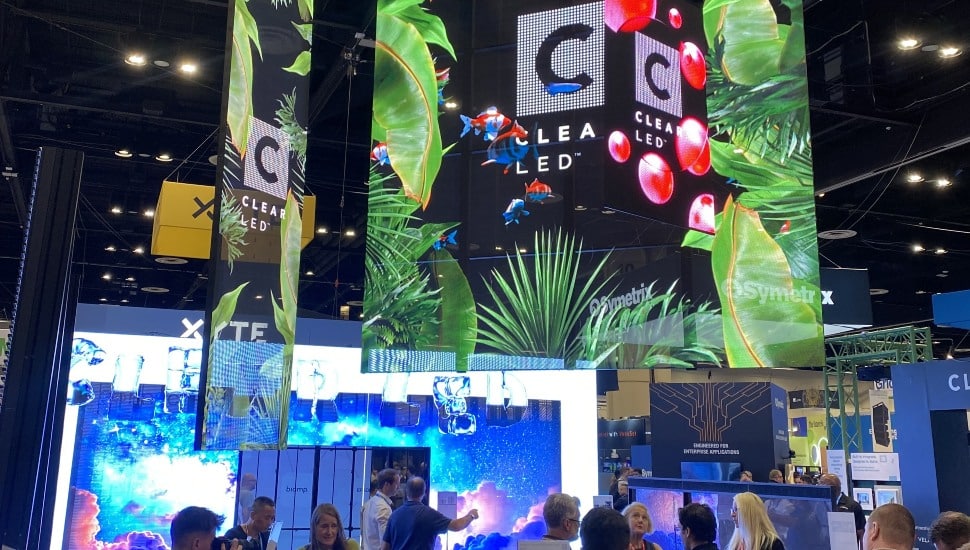
Eye-catching and ultra-modern, ClearLED and Muxwave showcased see-through LED displays that can be suspended in open areas or mounted on glass like tape. These displays will boost the cool factor of spaces and offer a futuristic look for open environments.
5. Customize Teleconferencing with Advanced Room Diagnostics
Crestron’s 1Beyond and Q-SYS Vision Suite made it easier than ever to adapt A/V setups on the fly.
“Pre-programmable zones mean the layout of your meeting space can change, and the tech just keeps up,” said Chalfant. “Meanwhile, environmental controls mean room temperatures can be kept consistent.”
6. AI-Enabled Cameras Keep Speakers in Focus
Camera systems with features like Presenter Spotlight, Speaker Spotlight, and voice-activated automation are transforming remote collaboration.
“We’re seeing fully automated rooms with zero manual control needed,” said Chalfant.
AI uses include:
- Presenter Spotlight: Uses full-body recognition to track a presenter as they move around the room, delivering smooth, cinematic camera motion without needing manual control.
- Speaker Spotlight: Detects who is speaking based on voice location and automatically frames the camera on them — no presets required.
- Voice Activity Detection: Filters out background noise (like typing or rustling) and only responds to intentional speech, ensuring accurate camera switching.
- Full Room Automation: The system can trigger lighting, displays, microphones, and other devices based on visual or audio cues, creating a seamless and immersive environment.
7. Auracast Bluetooth Helps You Hear Everything
Auracast audio is a game-changer for accessibility. By allowing a single broadcast to reach many receivers, this Bluetooth innovation enhances compliance and inclusivity across public and commercial spaces.
“This is going to become the new standard in assistive listening for public spaces like gyms, sports bars or museums, or meeting spaces, lecture halls, or event venues,” Chalfant said. “Users can tune in using their own Auracast-enabled devices like hearing aids, headphones, or smartphones, making them easy to use and an excellent tool to help your business comply with ADA-accessibility requirements.”
8. 3D Displays Come a Step Closer to Reality
Still in development, Sony’s new glasses-free 3D displays respond to eye movement and hint at a future where A/V becomes more immersive than ever.
“Each of these trends represents a step toward environments that adapt to people — not the other way around,” said Chalfant. “It’s an exciting time for anyone designing collaborative, inclusive, and intelligent spaces.”
InfoComm 2025 offered a solid look at where the industry is headed, with meaningful advancements in flexibility and intelligent design. If you’re planning your next A/V upgrade, now’s the time to start thinking smarter — not just bigger.